How to avoid tourist restaurants!
What is a tourist restaurant?
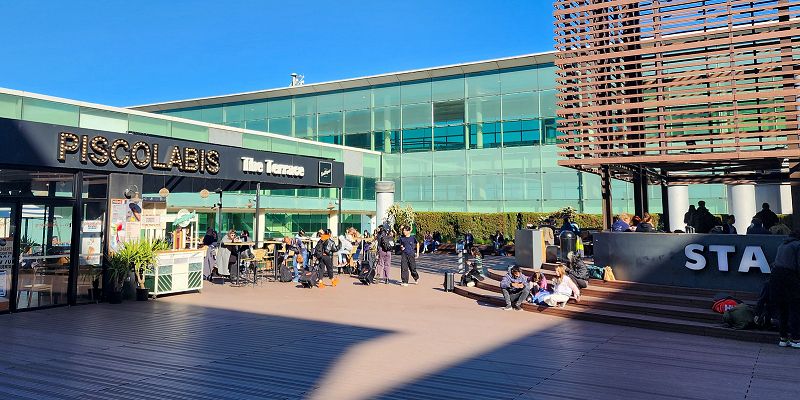
A tourist restaurant is a large restaurant with an industrial kitchen and often coach parking nearby. It is designed to serve tourist groups fast with a boring international set menu that offends no one with, sometimes, a tamed local specialty added. Which pretty much defines what you ate on the flight over, right? It is not bad, but certainly not memorable. On the positive side, you won't be surprised by odd exotic flavors, and you'll be in and out in no time. Group tours can do lunch or dinner in one hour flat! It is also likely to be less expensive, assuming the restaurant offers the same menu to walk-in tourists as they do to booked tours. The downside is that the meal can be disappointing.
But you will not get sick! Tour operators want to make sure no one gets sick causing serious disruption in the program. Sadly food safety is often a trade-off over taste and quality of the meal. At times, the prices shown on the menu are far higher than what groups actually pay ... it makes the group tourists think they are getting a fancy and expensive meal! At worst, you sit and wait for service while they are busy catering to two groups of 50 tourists.
Chicken is king for tourist restaurants because there are no major religions forbidding chicken! Steamed or stewed is most likely, freshly grilled is not possible in large quantities within the timeframe. Depending on the tourist market, there may be no pork to be found, or no beef if catering to tourists from Buddhist regions. Fish is also universal, but more expensive and also more difficult to handle, except may white fish fillets which taste just as bland freshly cooked as they do when cooked four hours ago.
There are always exceptions
At times tourist restaurants can be a good deal, serving a fair meal quickly for a moderate price. They may be unavoidable because of location. For example, Jungfrau, Gornergrat (where you go to see the Matterhorn) and Zugspitze feature above average "tourist" restaurants all serving excellent meals, which is quite a feat being higher on the Alps than aircraft cabin altitude.
Meals on river or day cruises are hit or miss where it may be so good that is the selling point of that ship. Look for Rhine or Danube day or dinner cruises because of the long stretch of these rivers with great scenery, there is a multitude of above average offerings with a few being truly memorable. If the cruise is not showing the meal as the main feature, expect a bank of buffet pans that are best avoided.
How to spot the bad ones?
About the truly bad tourist restaurants, the ones you have to watch out for. Typically, they are located on a high-traffic tourist path with a set menu posted outside in ten languages. That in itself does not automatically mark them as "out to get you"; what does, and what you cannot see on travel sites, is the complete lack of local patrons, especially the younger ones. Understand the issue of repeat business: the large restaurants for groups will always be better because they need repeat business from tour operators, while the smaller tourist restaurants do not get repeat business, only bad reviews, which most tourists read at home weeks early, but not right now, right here when it is time to eat. It may sound harsh, but it is the sad reality of the business in tourist areas.
How to find the better ones?
There are local people in tourist areas to work in the tourist shops and attractions. They eat and drink too! And the younger ones are also more sensitive to meal prices. They will go just a couple streets off the tourist area, where the rent is cheaper and where they rely on the local trade with good food at a price they can afford everyday. There may not be a menu posted outside, but you can often smell the cuisine from the street. If they do have a menu posted outside in English, it is not a bad sign in this context; it shows that they do welcome tourists, and if that menu looks interesting (no rubber chicken and meat in sauce), so much the better. Peeking through the window, you see some younger and obviously local patrons, then you have probably found the right place: it's not a tourist restaurant but a restaurant where tourists are welcome and likely to be treated well.
What about alternatives?
You are on vacation, how about throwing out the daily meal routine and going with cravings and desserts? Step in a grocery store and pick up what smells good, looks good, and does not require cooking. Dry sausages, local bread, fruits, cheese? Then head for the beach, a park, any quiet spot to watch the world go by, and eat your goodies with your fingers. Walk in a bakery, small pastries full of fruits or cream, it is food! Get the big one at the ice cream shop, it is milk!
Street food?
Yes and no! The issue of food safety is not simple or obvious. If you follow a few basic rules, street food is a great vacation choice. Number one: the earlier the safer, for obvious reasons. We worry about meats and seafood, but would never think about rice. Yet, cooked rice which has been on a street cart for more than 2-3 hours is in the danger zone as bacteria multiply very quickly between 4°C and 60°C (40°F and 140°F). Grilled sausages are fine if they are grilled now, not sitting on display. Fresh fruits are an excellent choice if they are peeled and cut now, not sitting in the open attracting flies. Seafood is always questionable as it requires uninterrupted cold storage to remain safe.
The bottom line is that getting even mild food poisoning wrecks your vacation. It does not mean that you should limit yourself to branded fast food (the most predictably safe because of both brand safety and process). Use common sense and enjoy the local flavors!